We look back on a historic event which continues to inspire our activism.
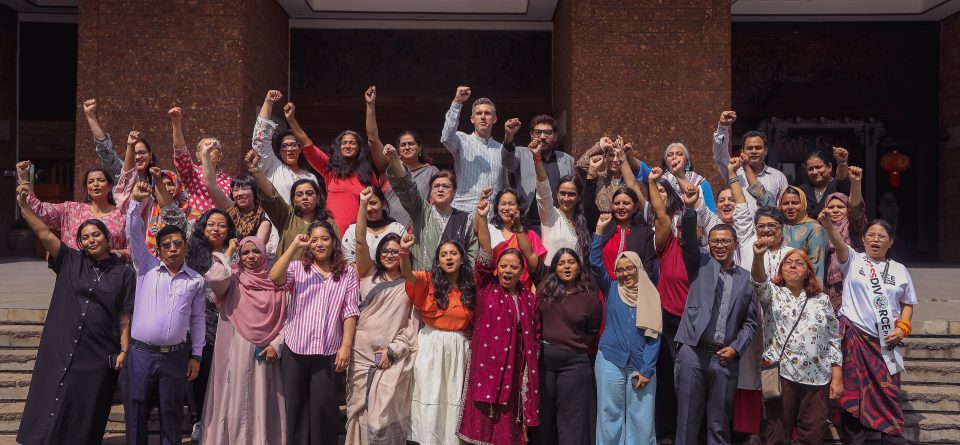
In early December 2025, the Global Campaign for Equality in Family Law (GCEFL) and Equality Now co-hosted the first South Asia Regional Convening on Family Laws in Colombo, Sri Lanka. The gathering brought together over 40 advocates and activists from seven countries, including Bangladesh, India, Nepal, Pakistan, Sri Lanka, Malaysia and the Philippines, to discuss the region’s family law frameworks. Following a difficult week, as Sri Lanka reeled from the impact of a devastating cyclone, logistics and planning for the convening seemed impossible. But, despite these challenges, the event went ahead – mirroring the tenacity of the activists and advocated who gathered to share their wisdom and exerience.
Over three days, the convening explored ways to reform discriminatory family laws in South Asia and their intersections with child marriage, gender-based violence, SRHR, divorce, custody, maintenance and matrimonial property rights. Participants also discussed structural barriers that hinder reform, including gaps in implementation of laws, legal loopholes, weak legal systems and inefficient state institutions. Through exploration of shared experiences and contexts, it became clear that any progress to law reforms in South Asia continue to be stalled due to practices stemming from patriarchy, culture, religion and colonial mindsets.
Understanding contexts
Experts from across the region shed light into nuanced country contexts, drawing parallels between other countries and sharing success stories that have worked for them. As mainstream conversations on family laws often focus on laws affecting majority contexts, sessions were also designed to include the narratives of minority communities that are frequently left behind.
Participants from Bangladesh, India and Pakistan highlighted how outdated colonial laws, majority – minority dynamics and the varied application of religious laws continue to entrench inequality and hamper attempts at law reform. In the Philippines, the absence of a divorce law has further validated violence against women where 1 in 4 married women experience violence. In Sri Lanka, Muslim women remain neglected by the state as both the general law and the Muslim Marriage and Divorce Act (MMDA) refuse to offer them protection. There has been a longstanding struggle for reforms to the MMDA for over 40 years.
On a positive note, all participants drew inspiration from Nepal and its progressive uniform civil code that applies to all communities without differentiation; however, gaps in legal implementation continue to push back progress.
Child marriage and economic rights
The convening also conducted parallel workshops focusing on child marriage and economic rights to further unpack key issues, country contexts and breakthrough strategies. One conversation that strongly resonated in the child marriage workshop was how the age of marriage is often conflated with the age of consent, and the need to delink concepts of sex and marriage. Participants noted that policy responses tend to rely on punitive measures and criminalisation of adolescents rather than addressing underlying drivers.
The workshop on economic rights highlighted economic justice as a central – yet often overlooked – dimension of family law. Participants examined how family law shapes key life moments and how discriminatory laws function as a structural barrier to women’s economic participation. These laws were found to reinforce poverty and inequality by limiting women’s access to assets, property, employment and financial decision-making.
Celebrating activism
The ‘Campaign Carnival’ – a celebration of activism, rooted in the idea that joy itself is a form of resistance – showcased national and international movements for family law reform. Embodying the true South Asian wedding spirit, participants arrived in festive shaadi attire to exchange not only stories of struggle and resilience but also food, games and dance. Designed to step away from the formal tone of the convening, the carnival created an interactive and colourful space for advocates to discuss their work with each other in creative, offbeat ways. Mehendi-stained hands spoke of justice and solidarity and participants danced to local songs.
Regional envisioning and way forward
Participants mapped out how to build solidarity and advance regional strategies at a moment when funding is uncertain, donor priorities are shifting, and civic spaces are shrinking amid right-wing politics and anti-rights movements. The Global Campaign encouraged participants to take up collective action and regional collaborations, and shared how they could offer support in this context.
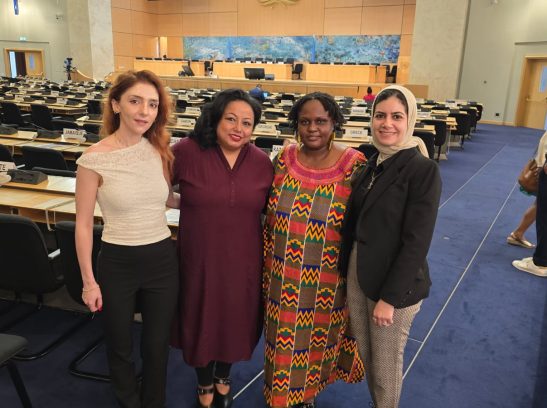
The convening was key moment for the Global Campaign, and a powerful reminder of the importance of learning from specific contexts. This has already been seen in centering of regional and national movements in global advocacy at international platforms such as #CSW70 in New York earlier this year, where we highlighted lessons from national efforts on family law reform.
We continue to draw inspiration from this momement, and from the powerful advocates working to create real change for women and girls across the South Asia region.